
This article is not a wellness trend piece. It is a guide to the scientifically supported connection between the gut microbiome and skin condition — and how this connection can be purposefully supported.
The gut–skin axis: what it is and why it matters
The gut and the skin share more than one might initially expect. Both organs function as barriers to the outside world, both are densely connected to the immune system, and both host vast communities of microorganisms. Research published in leading peer-reviewed journals confirms that this connection is no coincidence — it is a bidirectional communication that scientists call the gut–skin axis.
Gut microorganisms produce metabolites — short-chain fatty acids, hormones, neurotransmitters — that travel through the bloodstream all the way to the skin. They influence its inflammatory state, speed of regeneration, and capacity to maintain a functioning barrier. And because approximately 70–80 % of all immune cells in the body reside in the gut, the microbiome has a direct impact on how the immune system responds at the skin as well.
A landmark review by Mahmud et al. (2022), published in the journal Gut Microbes, puts it plainly: a disruption of the relationship between the gut microbiome and the immune system can trigger skin diseases. Dysbiosis — an imbalance of the gut microbiome — is scientifically linked to the development of atopic dermatitis, psoriasis, acne, rosacea and alopecia. [PubMed: 35866234]
Skin problems as a warning signal from within
Atopic dermatitis is the most common inflammatory skin disease — affecting 7 % of adults and 15 % of children. Studies consistently show that patients with atopic eczema display specific deviations in the composition of their gut microbiome. Similar findings apply to psoriasis, chronic acne and rosacea.
The study by De Pessemier et al. (2021) in the journal Microorganisms confirms this: dysbiosis of both the gut and skin microbiome is associated with impaired immune responses and promotes the development of a wide range of skin conditions. [PMC: 7916842]
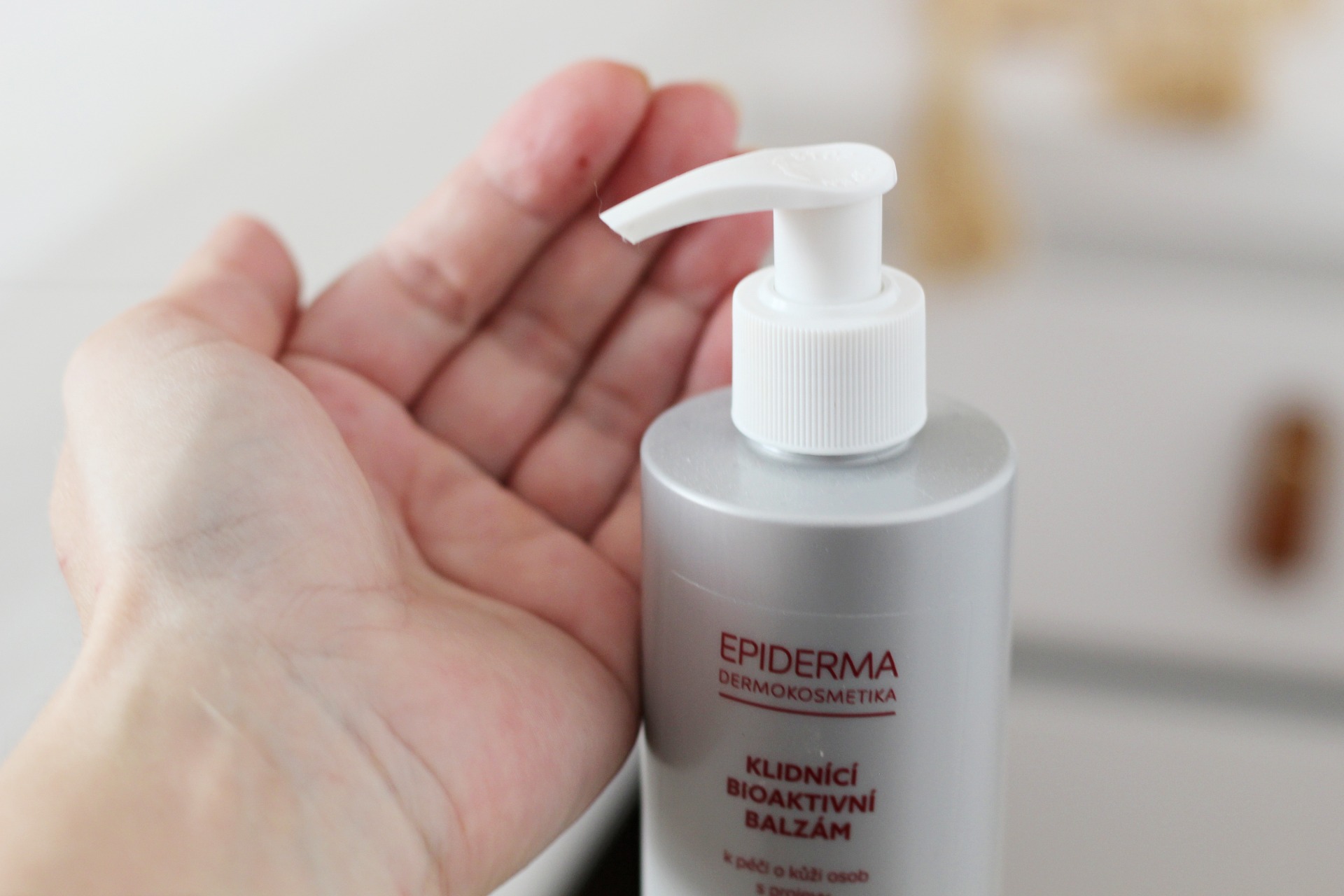
What does this mean for everyday skin care? Topical treatment is always only part of the answer. If we do not support the body's internal environment, we are working with only half of the equation. This is precisely the philosophy behind EPIDERMA's approach: combining effective dermcosmetics with nutricosmetics that support the skin from within.
Which ingredients genuinely support the gut–skin axis
Modern nutricosmetics does not stand on a single "miracle ingredient". The skin — and the gut–skin axis in particular — needs comprehensive support from multiple synergistically acting substances. Based on available clinical data, the following groups consistently prove most important:
Probiotics: the foundation of microbial balance
Specific bacterial strains help restore the microbial balance in the gut, which translates directly to improved skin health. The strain Bifidobacterium breve B-3 is studied for its influence on atopic skin. The strain Lactobacillus plantarum 299 is one of the most thoroughly researched probiotics, with beneficial effects on the intestinal barrier. A review by Chai et al. (2024) in Frontiers in Microbiology confirms that probiotics and prebiotics have the potential to alleviate symptoms of skin diseases through modulation of the gut–skin axis. [PMC: 11184158]
Omega-3 fatty acids (DHA and EPA)
DHA and EPA contribute to normal heart function and normal brain function. They also play a role in regulating systemic inflammation, which manifests visibly on the skin. Omega-3 from algae sources is a fully vegan alternative with a complete DHA and EPA profile.
Zinc
Zinc contributes to the maintenance of normal skin and to the normal function of the immune system. It plays a key role in regulating sebum production and in healing processes. Glutsch et al. (2019) in the Journal of the German Dermatological Society rank zinc among the most significant micronutrients for skin health. [PubMed: 30873720]
Vitamin D3
Vitamin D3 contributes to the normal function of the immune system. Research further shows that vitamin D3 acts as a modulator of the gut microbiome — a connection that is particularly relevant for the gut–skin axis. Jimenez-Sanchez et al. (2025) confirm this in the most recent review in Gut Microbes. [PMC: 11901370]
Curcumin (turmeric extract 95 %)
High-concentration turmeric extract is intensively studied for its properties in the context of inflammation and the integrity of the intestinal barrier. Piperine, added in the form of piperine extract 95 %, increases the bioavailability of curcumin by up to 2 000 %.
Hyaluronic acid and milk thistle
Hyaluronic acid supports skin hydration from within. Milk thistle extract (silymarin) is traditionally used to support liver function — and the liver plays an important role in the detoxification of metabolites that also affect skin health.
Stinging nettle and vitamin B5
Stinging nettle extract 10:1 is rich in bioactive substances with observed influence on inflammatory processes. Vitamin B5 (pantothenic acid) contributes to normal mental performance and to the reduction of fatigue.

Why a comprehensive approach is more effective than any single ingredient
The gut–skin axis is not a simple connection between two organs. It is a complex system of immunological, metabolic and microbial interactions. That is precisely why the results of supplements built around a single "miracle ingredient" are so unpredictable — the skin needs support on multiple fronts at the same time.
Developing a formulation that synergistically covers this entire system took more than a year of development at EPIDERMA. The result is DermBalance Complex® — 13 carefully selected ingredients in a single vegan HPMC capsule, designed to support the gut–skin axis together — from the gut microbiome through the immune system to the skin barrier.
That is exactly what I believe modern nutricosmetics should be, as a dermatologist: not a replacement for topical treatment, but its intelligent internal complement.
DermBalance Complex® → 13 ingredients. 45-day course. Comprehensive skin care from within.
Learn more and order →
Frequently asked questions
The gut–skin axis is a scientifically described system of bidirectional communication between the gut microbiome and the skin. The state of the gut microbiome directly influences skin health via the immune system, metabolites and inflammatory mediators — and vice versa.
Yes — that is precisely what science has been intensively researching and confirming in recent years. Dysbiosis of the gut microbiome is linked to the development of atopic dermatitis, psoriasis, acne and rosacea. By supporting the gut microbiome with targeted probiotics and nutrients, the symptoms of these conditions can be measurably alleviated.
No — and it should not. The purpose of nutricosmetics is to complement topical skincare with an internal dimension. The ideal approach is a combination: quality dermcosmetics applied externally + targeted nutrition from within. That is precisely how EPIDERMA works.
Skin cells renew approximately every 28–40 days. For changes in the microbiome to be reflected in the visible condition of the skin, at least 4–6 weeks of regular use are generally required. That is why DermBalance Complex® is designed as a 45-day course.
The product is not intended for pregnant or breastfeeding women or children under 12 years of age. If you are taking medication or have a diagnosed condition, consult your doctor before use.
Scientific sources
- Mahmud MR et al. Impact of gut microbiome on skin health: gut-skin axis observed through the lenses of therapeutics and skin diseases. Gut Microbes, 2022; 14(1):2096995. PubMed: 35866234 | PMC: 9311318
- De Pessemier B et al. Gut–Skin Axis: Current Knowledge of the Interrelationship between Microbial Dysbiosis and Skin Conditions. Microorganisms, 2021; 9(2):353. PubMed: 33670115 | PMC: 7916842
- Chai J et al. Editorial: The gut-skin axis: interaction of gut microbiome and skin diseases. Front Microbiol, 2024; 15:1427770. PubMed: 38894969 | PMC: 11184158
- Jimenez-Sanchez M et al. The gut–skin axis: a bi-directional, microbiota-driven relationship with therapeutic potential. Gut Microbes, 2025; 17(1):2473524. PubMed: 40050613 | PMC: 11901370
- Glutsch V, Hamm H, Goebeler M. Zinc and skin: An update. J Dtsch Dermatol Ges, 2019; 17(6):589–596. PubMed: 30873720
This article is for educational purposes only and does not replace medical consultation. DermBalance Complex® is a food supplement and is not a substitute for a varied and balanced diet and a healthy lifestyle. Not intended for pregnant or breastfeeding women or children under 12 years of age.
Author: MUDr. Jiří Skalický